by dividoz
Share
Choosing between framed and frameless glass partitions is not only a design decision. In most offices, the right choice comes down to how the space needs to work day to day. Appearance matters, but so do privacy, acoustics, layout, and long-term practicality.

Modern offices rarely need one solution for every room. A boardroom, executive office, focus room, and client-facing meeting space all ask for something different from a partition system. Some spaces need a sharper visual finish and uninterrupted sightlines, while others need stronger privacy, better sound control, and more robust detailing. That is why the choice between framed and frameless glass partitions should be made around the room function first, then design preference.
Frameless systems are often preferred for a cleaner, lighter look. Framed systems are often chosen where stronger structure, better detailing, and more reliable acoustic sealing matter. A stronger decision comes from matching the system to the room’s real use. In this guide, we compare framed and frameless glass partitions across design, acoustics, privacy, cost, maintenance, and best use by office space, so it is easier to choose the right fit for your workplace.
What Is the Difference Between Framed and Frameless Glass Partitions?

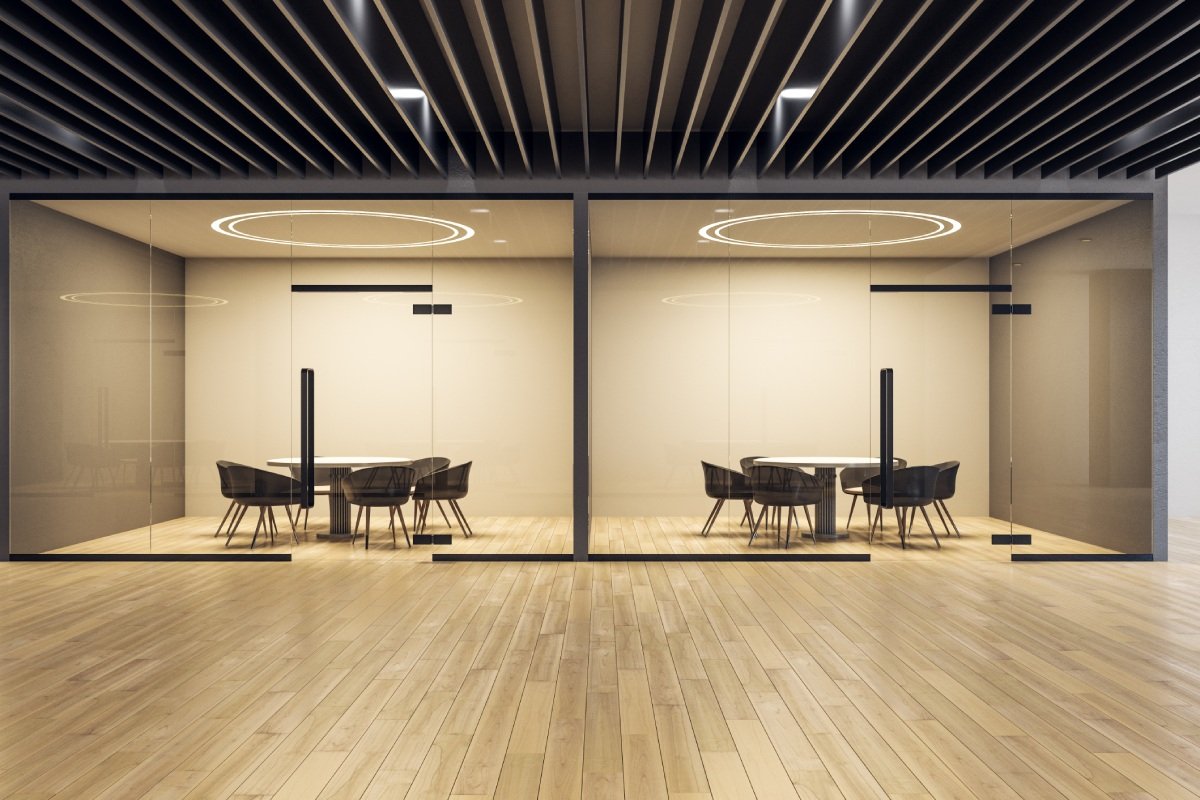
The main difference is simple: framed glass partitions use visible metal framing around the glass, while frameless glass partitions reduce visible structure to create a cleaner, more minimal finish. That visual difference affects more than appearance. It can also influence how the system performs in everyday office use.
Frameless glass partitions are usually chosen for offices that want maximum openness, uninterrupted sightlines, and a more contemporary look. They are popular in meeting rooms, executive spaces, and client-facing environments because they help the office feel lighter and more refined.
Framed glass partitions are usually chosen when the office needs more structure, stronger detailing, or better support for sound control. Frames make it easier to integrate seals, different panel types, and more robust door systems, which is why framed partitions are often used in private offices, meeting rooms, and spaces where acoustic consistency matters more.
In simple terms, frameless partitions are often the stronger choice when the priority is a clean visual finish. Framed partitions are often the better option when the brief demands more from the system in privacy, durability, or acoustic performance. The right answer depends on the type of office, the type of room, and what the partition needs to achieve once the space is in use.
Framed vs Frameless Glass Partitions at a Glance

At a high level, frameless glass partitions are usually chosen for a cleaner and more minimal look, while framed glass partitions are often preferred where stronger acoustic sealing, structure, and practicality matter more.
| Factor | Framed Glass Partitions | Frameless Glass Partitions |
|---|---|---|
| Overall look | More defined and structured | Cleaner and more minimal |
| Best for | Private offices, meeting rooms, focus spaces | Boardrooms, client-facing rooms, design-led offices |
| Acoustic performance | Usually stronger because frames can support better seals and double glazing | Can perform well, but often less effective than framed systems for higher acoustic demands |
| Privacy | Better suited to rooms needing stronger speech privacy | Better where openness and light are more important than full privacy |
| Durability | More robust for heavier everyday use | Strong, but chosen more for visual finish than structure |
| Cost | Often more cost-effective and faster to install | Often higher in cost because of precision detailing and cleaner finish |
| Design feel | Practical, architectural, and versatile | Sleek, modern, and visually light |
| Best choice when | Performance, privacy, and practicality lead the brief | Visual openness and premium appearance lead the brief |
When Frameless Glass Partitions Are the Better Choice
Frameless glass partitions are the better choice when the priority is a clean, open, and more premium-looking office. They are designed to reduce visible structure, which creates lighter sightlines and a more minimal finish.

Best for design-led office spaces
Frameless systems work especially well in offices where appearance plays a big role in the overall brief. They suit boardrooms, executive spaces, reception areas, and client-facing meeting rooms because they create a sharper and more contemporary look.
Best when openness and daylight matter
One of the biggest advantages of frameless partitions is how open they feel. With less visible metalwork, they allow clearer sightlines and help maximise natural light across the office. This makes them a strong fit for workplaces that want defined rooms without losing the brightness and transparency of an open-plan environment.
Best for a minimal and uncluttered finish
Frameless glass partitions also appeal to buyers who want the office to feel visually quiet. Without heavy framing, the system looks more refined and less bulky, which can work particularly well in premium office interiors. This is one reason frameless systems are often chosen for executive offices and formal meeting spaces where the visual impression matters as much as the layout itself.
Where frameless systems can fall short
Frameless partitions are not always the best option for every room. They can require more precise installation and may not be the strongest choice where higher acoustic sealing or stronger structural detailing is needed. In offices where privacy and sound control matter more, a framed system is often the more practical option.
When Framed Glass Partitions Are the Better Choice
Framed glass partitions are the better choice when the office needs more than a clean visual finish. They are often better suited to spaces that need stronger structure, better sealing, and more reliable acoustic performance. Manufacturers and partition specialists consistently position framed systems as the stronger option for sound insulation, heavier daily use, and larger office layouts.

Best for privacy and acoustic control
Framed systems are often the safer choice for meeting rooms, executive offices, and focus spaces where speech privacy matters. The frame makes it easier to integrate seals, thicker glass, and double-glazed configurations, which can improve sound control. Bene states that its office glass wall systems can reach up to 38 dB (Rw) in single-glazed form and up to 51 dB (Rw) in double-glazed form, depending on configuration.
Best for practical, high-use office spaces
Framed glass partitions also work well in offices that need a more robust system for everyday use. Added structure can support durability and make framed systems a practical fit for larger layouts, private offices, and rooms with frequent opening and closing. Komfort highlights framed partitions for their added support and rigidity.
Best when flexibility in specification matters
Framed systems are often easier to adapt when the brief includes acoustic doors, double glazing, privacy elements, or custom frame finishes. That makes them useful where the partition has to do more than divide space.
Where framed systems may be less suitable
Framed partitions are not always the first choice when the brief is led by minimalism. They can look more defined and architectural, which may not suit every design concept. In spaces where uninterrupted sightlines and a lighter visual feel matter most, frameless systems often create the cleaner result.
Framed vs Frameless: 7 Factors That Matter Before You Decide
Choosing between framed and frameless glass partitions becomes easier when the decision is broken down into the factors that affect daily office use the most. The right choice depends on how the room needs to look, how much privacy it needs, and how much performance the system is expected to deliver. German workplace guidance also places clear importance on acoustics in shared office environments, which makes this more than a style decision.

1. Appearance and design style
Frameless partitions create a cleaner and more minimal look. Framed partitions feel more defined and architectural. If the brief is led by openness and visual lightness, frameless often works better. If the office needs a stronger system presence, framed can be the better fit.
2. Acoustic performance
Framed systems usually have the advantage where sound control matters more. Frames can support better seals, stronger door integration, and higher-performance glazing setups
3. Privacy
If the room is used for confidential meetings, focused work, or leadership discussions, framed systems are often the safer choice. Frameless systems can still work well, but rooms with higher privacy demands usually benefit from stronger acoustic detailing and more controlled door performance.
4. Cost
Frameless systems often cost more because they rely on cleaner detailing and more precise installation. Framed systems are often more cost-effective, especially where practicality and performance matter more than achieving the most minimal finish. Acoustic requirements, finishes, and installation complexity also affect final cost.
5. Durability and daily use
Framed partitions are often the better option in offices that need a more robust system for frequent daily use. Added structure can improve support and long-term practicality, especially in larger office layouts or rooms with heavier traffic.
6. Flexibility in specification
Framed systems are often easier to adapt when the project includes double glazing, acoustic doors, custom finishes, or stronger privacy requirements. Frameless systems are usually chosen when the goal is a lighter visual result with fewer visible elements.
7. Best fit by room type
Frameless partitions are often stronger in boardrooms, reception spaces, and client-facing rooms where appearance leads the brief. Framed systems are usually a better fit for executive offices, focus rooms, and meeting spaces where privacy and sound control matter more. In many workplaces, a mix of both gives the best result.
Which System Works Best in Different Office Spaces?

The best system usually depends on the room’s purpose, privacy needs, and acoustic demands. Practical acoustic guidance recommends aligning room use and sound-control needs early, and German workplace guidance places specific room-acoustic requirements on shared and open-plan office areas.
| Office Space | Best Fit | Why |
|---|---|---|
| Meeting rooms | Framed or frameless | Frameless works well where openness and a clean look matter most. Framed is usually better where meetings need more privacy or more consistent acoustic control. |
| Boardrooms | Frameless or high-performance framed | Frameless suits premium, design-led spaces. Where confidential discussions are common, stronger acoustic-ready systems are usually the safer choice. |
| Executive offices | Framed | Executive rooms often need a balance of presentation, privacy, and daily performance, which usually favours framed systems with better sealing and door integration. |
| Open-plan work zones | Frameless for zoning, framed for quieter zones | Frameless helps define space without making the office feel closed. Where concentration and speech control matter more, framed or acoustic systems are usually more suitable. |
| Reception and client-facing areas | Frameless | These spaces usually benefit from a lighter, cleaner, and more premium visual impression. |
| Focus rooms and confidential spaces | Framed | These rooms need stronger sound control, better sealing, and more reliable speech privacy, which framed and acoustic-ready systems support more effectively. |
Acoustic Performance: Why Framed Systems Often Have the Edge
Acoustic performance is one of the biggest practical differences between framed and frameless glass partitions. In offices, sound control depends on more than the glass itself. It also depends on the seals, door type, glazing build-up, and how the full system is detailed. Acoustic guidance for workplace partitions treats all of these as part of the final result, not as separate elements.
Why frames can improve sound control
Framed systems often have an advantage because the frame makes it easier to integrate seals and more controlled junction details around the glass and doors. That becomes important in rooms where speech privacy matters, such as meeting rooms, executive offices, and focus spaces.

Single vs double glazing
Glazing type also affects performance. Single-glazed partitions can work well in spaces with moderate acoustic needs, while double-glazed systems are usually better suited to rooms that require stronger speech privacy and quieter working conditions.
Why doors matter just as much
A partition can still underperform if the door is not specified properly. In many cases, sound leakage happens at the door edges, thresholds, or junctions rather than through the glass itself. Better door detailing can make a clear difference to the final result.
When frameless still works well
Frameless systems can still perform well in spaces where acoustic demand is moderate and the priority is openness, natural light, and a cleaner visual finish. They are often a strong choice for design-led meeting rooms, reception spaces, and offices where full speech privacy is not the main requirement.
Why this matters
If the office includes confidential discussions, focused work, or regular meetings, acoustic performance should be considered early. In these cases, framed systems are often the safer choice because they allow more control over sealing and overall system performance.
Cost Differences Between Framed and Frameless Glass Partitions
Cost is one of the clearest differences between framed and frameless glass partitions. In most office projects, framed systems are usually the more cost-effective option, while frameless systems often come at a higher price point because they rely on cleaner detailing, more precise installation, and a more minimal finish.

Why frameless usually costs more
Frameless systems often need thicker toughened glass, premium fittings, and tighter installation tolerances to achieve a clean visual result. That usually increases both material and labour costs.
What can increase the cost of framed systems?
Framed partitions are often more budget-friendly at a base level, but the price can still rise when the specification includes double glazing, higher acoustic performance, specialist doors, privacy elements, or custom finishes. In office partition systems, generally, acoustic requirements, finishes, customisation, and installation conditions are all major cost drivers.
Why the lowest cost is not always the best value
A lower upfront price does not always mean better value. A room used for confidential meetings, leadership discussions, or focused work may need stronger acoustic performance from the start. In those cases, choosing a lighter-spec system can lead to compromises later. Higher-spec systems cost more because they are built to deliver better sound control, door performance, and day-to-day usability.
What to keep in mind
A reception partition, standard meeting room, and confidential boardroom should not be budgeted in the same way. The better approach is to match the spend to the room’s privacy, acoustic, and performance needs.
What Matters When Choosing Framed or Frameless Systems in Germany
In Germany, the choice between framed and frameless glass partitions should be made with workplace acoustics in mind from the start. Shared offices, open-plan offices, and call-centre environments have specific room-acoustic expectations, and official guidance points to ASR A3.7 and DIN 18041 as key references for these settings.

Acoustics matter more in shared office layouts
German guidance sets room-acoustic requirements for offices based on how the space is used. For offices, recommended reverberation times include 0.5 seconds for call centres, 0.6 seconds for shared and open-plan offices, and 0.8 seconds for single and dual-occupancy offices. That makes framed systems the more practical choice in rooms where stronger sound control and tighter sealing are needed.
Room use should guide the system choice
Not every office room needs the same level of performance. A client-facing meeting room may suit a frameless system if visual openness is the priority, while executive offices, focus rooms, and confidential spaces often benefit more from framed systems because acoustic control matters more in daily use. German guidance also distinguishes room-acoustic needs by type of use, which supports a room-by-room approach rather than one system across the whole office.
Planning should come before style
A partition system should be selected after the office layout, room function, and acoustic needs are clear. In practice, that means the better choice is often the one that fits the workspace conditions first and the design brief second. This is especially important in offices where concentration, speech intelligibility, and privacy are part of everyday work
Can You Combine Framed and Frameless Glass Partitions in One Office?
Yes. In many office projects, a mixed approach is often the most practical choice. Different rooms have different jobs, so using one partition style across the entire office is not always the best fit. Acoustic partition guidance and office planning examples both support matching the system to the space rather than forcing the same solution everywhere.

Where frameless works best
Frameless glass partitions are often better suited to reception areas, boardrooms, and client-facing meeting spaces where visual openness, light flow, and a cleaner finish matter most. They help these spaces feel more refined and less visually heavy
Where framed works best
Framed systems are often the better choice for executive offices, focus rooms, confidential meeting spaces, and larger open-plan layouts where stronger acoustic control, better sealing, and more practical day-to-day performance are needed. Recent industry guidance also links framed systems with easier reconfiguration and better acoustic control in office settings.
Why a hybrid approach works
A mixed setup allows each room to perform the way it needs to. Open, design-led areas can stay visually light, while privacy-led spaces can be specified for stronger sound control and more reliable separation. This usually creates a better office overall than choosing framed or frameless purely for consistency.
What to keep in mind
If the office includes both client-facing spaces and privacy-led work areas, combining framed and frameless systems is often the stronger solution. The decision should come from room function, acoustic needs, and the level of visual openness each area requires.
Which One Is Right for Your Office?
Frameless glass partitions are best when the priority is openness, natural light, and a clean visual finish. Framed glass partitions are usually the better choice when privacy, acoustic control, and everyday performance matter more.
In many offices, the strongest result comes from using both. Frameless works well in client-facing and design-led spaces, while framed suits executive offices, focus rooms, and confidential areas better.